Skip to content
Home Crew Construction

Roofing · Long Island

Roofing vents & attic ventilation.

A roof wears out from below as well as above. Balanced ventilation keeps the attic cooler in summer and drier in winter, and helps the shingles last.

Get your free quote

Takes 30 seconds. We reply within 24 hours.

What do you need help with?
Your contact details

Project:

We only use your details to contact you about your project.

5.0 on GoogleCall 631-965-0881

Roofing vents let your attic breathe. Fresh air comes in low at the eaves, warm and damp air goes out high at the ridge, and the roof stays closer to the outside temperature. Home Crew Construction installs and corrects roof and attic ventilation on homes across Long Island, in Nassau County and Suffolk County.

Quick answer: Why does a roof need vents?

Roof vents let hot, damp air out of the attic while fresh air comes in at the soffits. Without them, summer heat bakes the shingles from below and winter moisture condenses on the roof deck, causing mold, rot and ice dams. Home Crew Construction installs and corrects roofing vents on Long Island homes.

How attic ventilation works
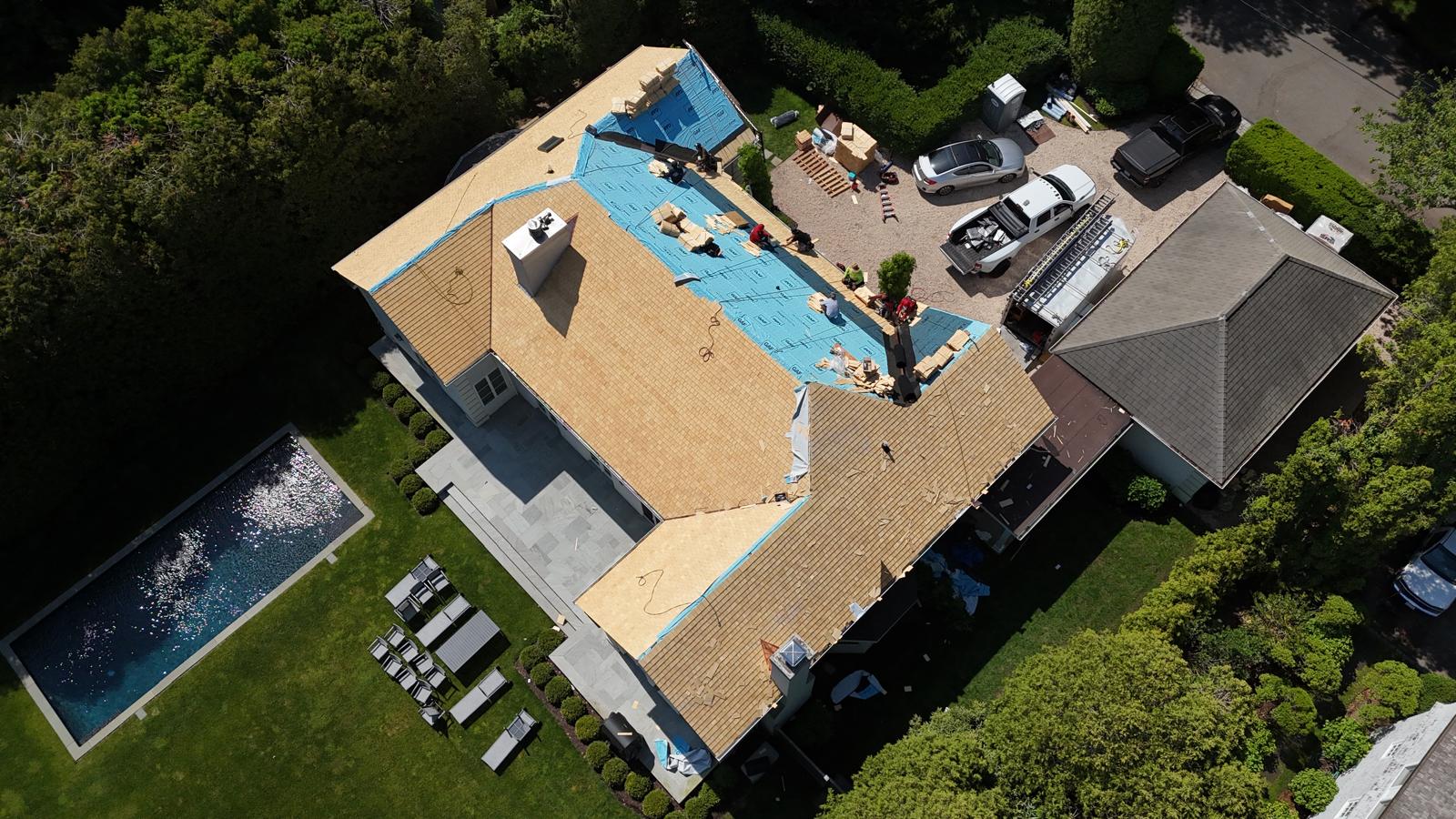
Aerial view of a roof replacement in progress, new blue underlayment going on beside a backyard pool
Roof replacement, underlayment going on· Home Crew Construction

Good ventilation is a balanced system: intake at the bottom of the roof and exhaust at the top. As the attic warms, the air rises and leaves through the exhaust vents, pulling cooler outside air in through the intake vents. The two sides need to be in balance. With too little intake the exhaust vents can’t do their job, and mixing different exhaust types on one roof can short-circuit the airflow, so the vents pull air from each other instead of from the soffits.

Types of roof vents we install

Illustration · Ridge ventLets warm, damp attic air out at the peak, so the deck and shingles last longer.
  • Ridge vents: a continuous vent along the peak, capped with shingles so it barely shows.
  • Soffit vents: intake vents under the eaves. They only work if insulation isn’t blocking them.
  • Box vents: individual exhaust vents near the ridge, for roofs where a ridge vent doesn’t fit.
  • Gable vents: louvered vents in the gable walls, common on older homes.
  • Bathroom and kitchen exhaust vents: roof caps that carry fan exhaust outside, instead of dumping moist air into the attic.
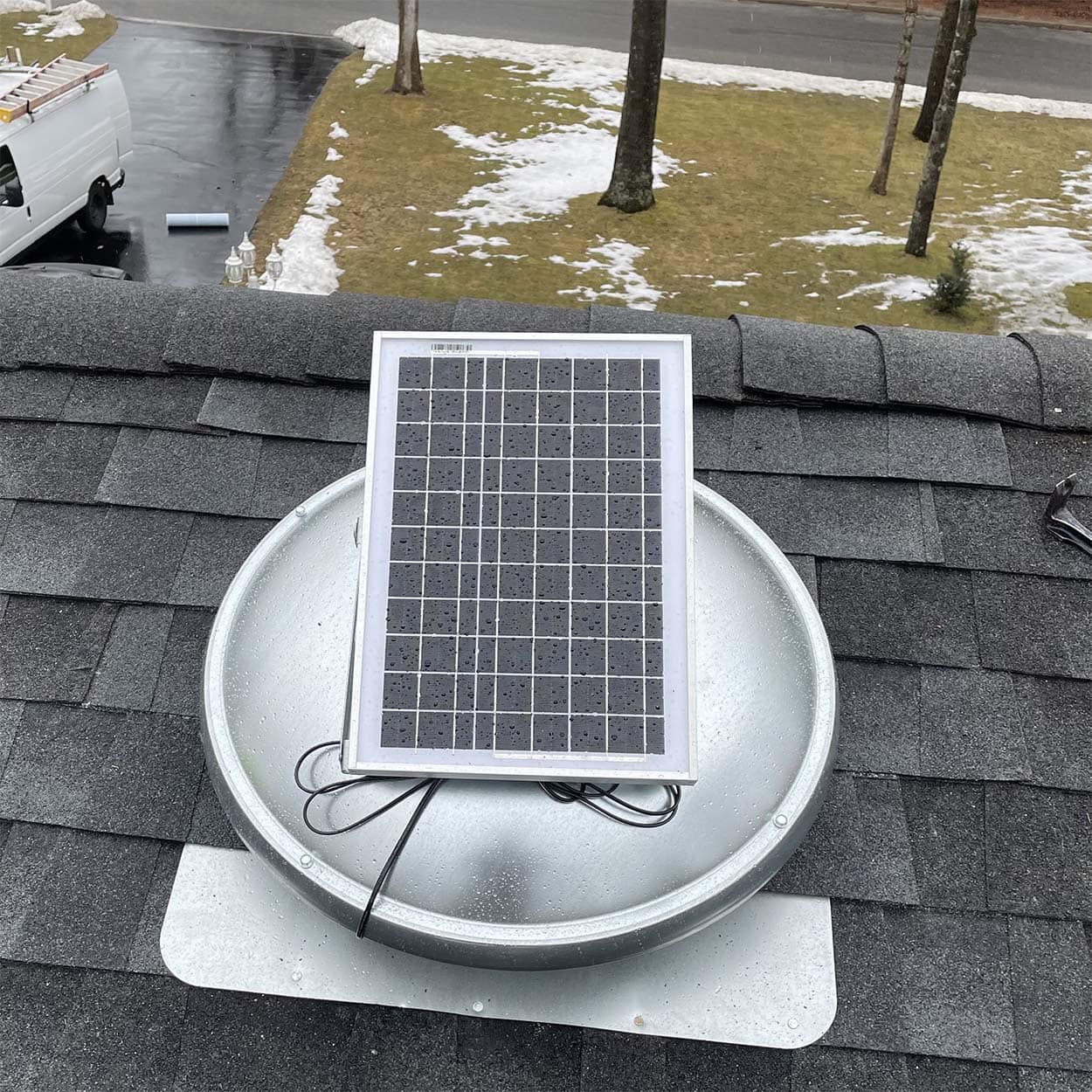
  • [Solar attic fans](/services/solar-attic-fan/): powered exhaust that runs on sunlight, for attics that need extra airflow.

Need help with roofing vents?

Free quotes, a reply within 24 hours, and we answer the phone 24/7.

5.0 on Google

Signs of poor attic ventilation

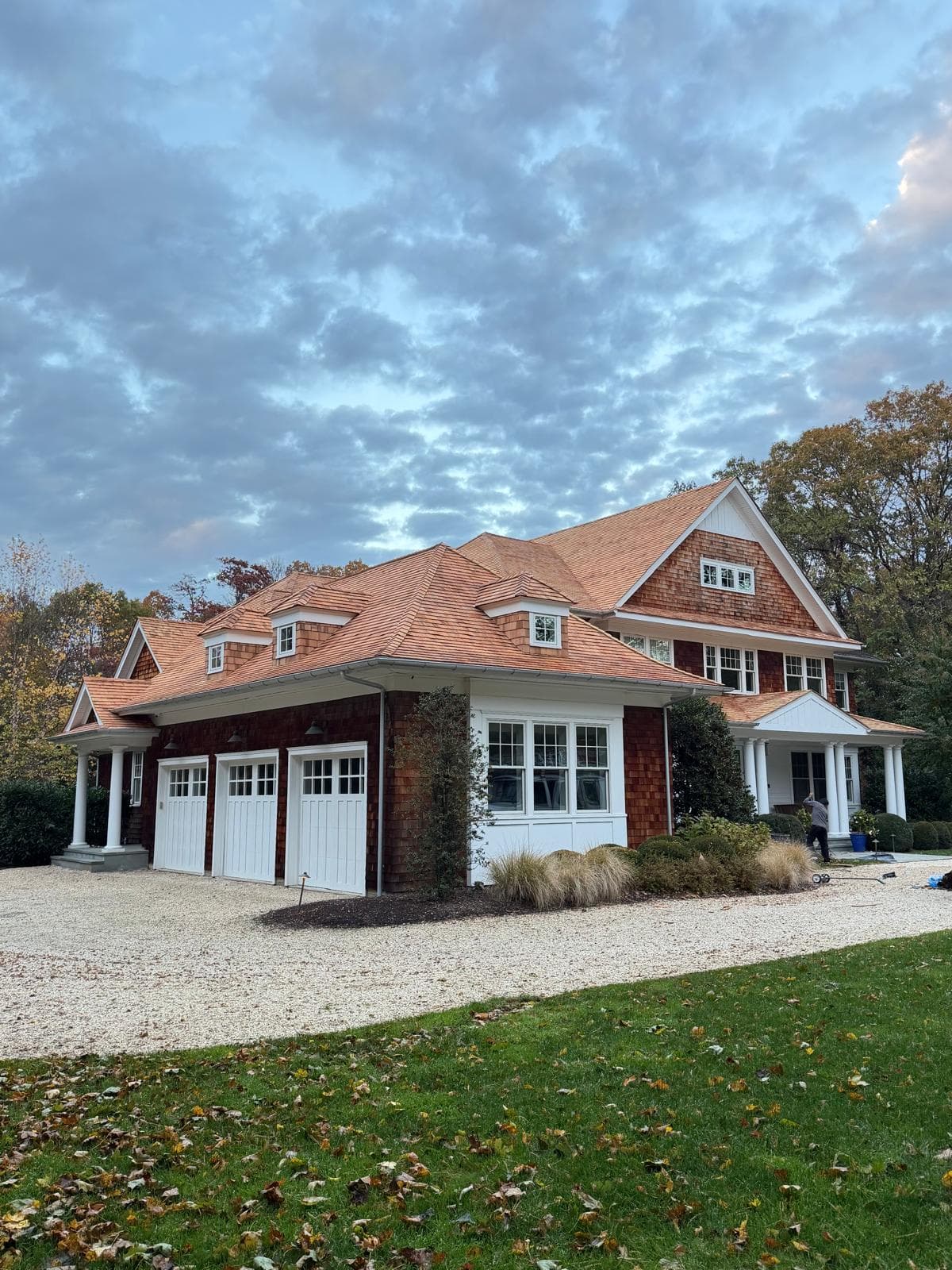
Aerial view of a large home with a cedar shake roof, surrounded by trees
Cedar shake roof· Home Crew Construction
  • An attic that’s extremely hot on a summer afternoon
  • Upstairs rooms that are hard to keep cool
  • Frost or condensation on the underside of the roof deck in winter
  • Mold, mildew or dark staining on rafters and sheathing
  • Ice dams along the eaves after snow
  • Shingles blistering or curling early
  • Bathroom fans that end in the attic instead of outside

Why ventilation matters for your roof

Heat trapped in the attic bakes shingles from underneath and can shorten their life. In winter, warm, moist air from the house condenses on the cold roof deck, which leads to mold and rot. Warm spots on the roof also melt snow that refreezes at the eaves as ice dams, pushing water under the shingles.

Balanced ventilation takes load off your air conditioning in summer, too. Shingle manufacturers expect proper ventilation, which is why it’s part of every new roof we install.

Ventilation and insulation work together

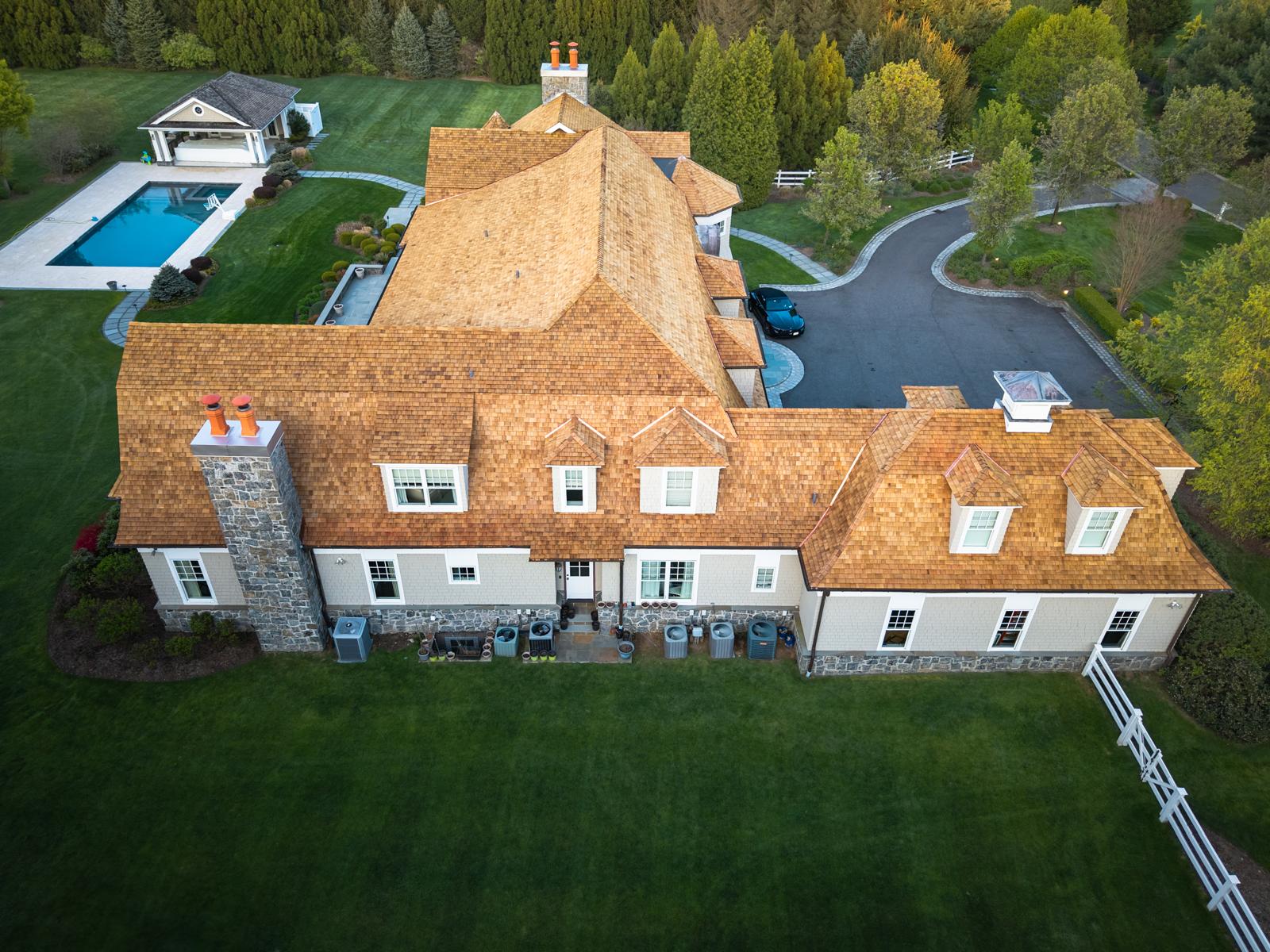
Cedar shake roof with dormers and a stone chimney on a white house beside a pool, seen from above
Cedar shake roof with dormers· Home Crew Construction

Vents move air; insulation keeps the house’s heat out of the attic in the first place. You need both. Insulation pushed tight into the eaves blocks the soffit vents, so there has to be a clear air channel above it. Gaps around attic hatches, recessed lights and pipes let warm, moist air from the living space leak into the attic, where it condenses. Sealing those gaps and getting the ventilation balanced is what keeps an attic dry through a Long Island winter and cooler through the summer.

Need help with roofing vents?

Free quotes, a reply within 24 hours, and we answer the phone 24/7.

5.0 on Google

How we install roofing vents

  1. Inspect the attic and roofWe check the existing intake and exhaust, the insulation, and where bath and kitchen fans actually end up.
  2. Recommend a balanced setupWe explain what’s needed and give you a clear written price.
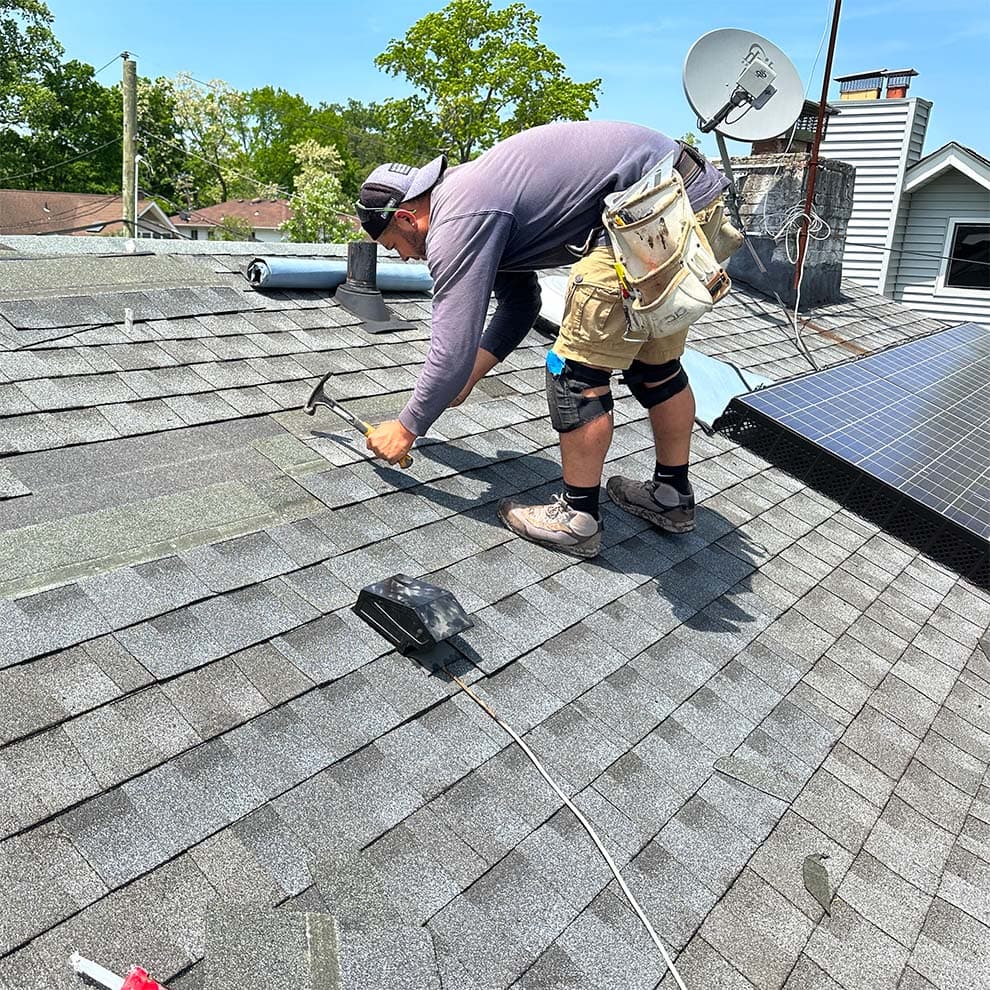
  3. InstallWe cut in and flash new vents, clear or add soffit intake, and route fan exhaust outside.
  4. Check and clean upWe confirm air can move from the soffits to the exhaust, then clean up completely.

Ventilation is worth checking during a roof inspection, and it’s simplest to correct during a roof replacement, when the ridge is already open.

Attic too hot, or seeing frost and mold up there? Call 631-965-0881 or request a free quote. We reply within 24 hours.

Roofing vents FAQ

Common questions.

Still not sure?

Call 631-965-0881 any time. We'll tell you straight whether it's a repair or a replacement.

01

Can a roof have too many vents?

It’s less about the number than the balance. Exhaust needs matching intake at the soffits, and mixing exhaust types, such as a ridge vent with box vents or a fan, can short-circuit the airflow.

02

Do ridge vents work without soffit vents?

Not well. A ridge vent needs air coming in low at the eaves to pull through the attic. Without intake, it can draw air from the house or pull in rain and snow.

03

Where should a bathroom fan vent?

Outside, through a proper roof or wall cap. A bath fan that dumps into the attic puts warm, wet air right where it causes mold and rot.

04

Can roof vents cause leaks?

A properly flashed vent shouldn’t leak. Older vents with cracked flanges or worn pipe boots are a common leak source, and we repair or replace them.

Questions about roofing vents? Let's talk.

Free, no-obligation quotes. We reply within 24 hours, and we answer the phone 24/7.

5.0 on Google · 10-yr labor warranty on new roofs

Call NowFree Quote
24/7 Emergency

Emergency · open 24/7

Roof leaking right now?

We answer day or night, stop the water first, then plan the repair.

Tap to call631-965-0881

5.0 on Google